The Body as a Question: Women’s Inheritance, Labour and Resistance
20.05.2026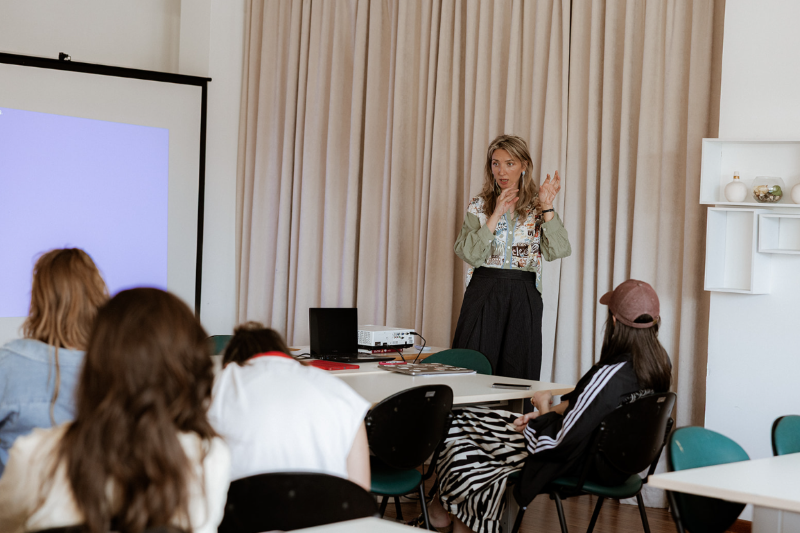
This project begins with women’s inheritance as a living, often invisible archive. At its centre is a form of knowledge that patriarchal orders have suppressed, diminished or declared insignificant precisely because it belonged to women: knowledge of the body, labour, textile, care, survival and resistance. This inheritance was not always allowed into public speech, but it endured in gesture, material, rhythm and memory.
Through textile, handwork, costume, care and their own bodies, women expressed and inscribed what often had no permitted public language. This is a form of exclusively female writing, expression and survival, preserved through the transmission of inheritance — through repetition, labour, learning by the body and everyday gestures.
The research line of the project develops from the fields of visual art, textile art and fashion design, scenography and costume design, as well as from doctoral research into non-verbal language in the performative arts of the former Yugoslav space. This is where the central question opens: how the body speaks before words, but also how patriarchal patterns pass through the body — labour, obedience, fear, shame, the obligation of care and the habit of enduring what is expected of women as “natural”.
For that reason, inheritance in this project is not approached only as a beautiful memory of women’s skills. Its darker side is equally important: what an earlier research text named the genealogy of patriarchal crime. Patriarchy does not survive only through open prohibition or violence, but also through the language of protection, morality, care and family duty. Violence often does not appear as an exception, but as a pattern justified by “good intention” or “care”.
If the body is understood as language, the analysis cannot remain only with words, or with what culture has recognised as text. In women’s experience, knowledge was often transmitted through everyday and ritual actions: through labour, repetition, voice, touch, fabric, lamentation, care. These practices have rhythm, duration and an internal structure. Ancient tragedy also reminds us of this, with history so often refracted through the suffering of the sister, the wife, the mother and the daughter.
This is why the figure of the “old maid” is important — in the Balkan languages often cura, a word for girl commonly associated with curiti, to leak or flow, referring to the female sexual organ — or the spinster, a word that originally meant a woman who spins. It was not only a derogatory label for an unmarried woman, but also a trace of one of the rare female occupations through which women, in societies that restricted their right to work and earn, could live from their own skill. Yet instead of remaining tied to labour, knowledge and independence, the term was culturally transformed into a label for an unmarried, redundant, sexually suspect, almost witch-like woman. The mechanism of patriarchy is clear: female skill is used, and then turned against the woman herself. A woman who works, earns, belongs to no husband and does not enter the prescribed economy of marriage and reproduction becomes dangerous; this is why literature, from Balzac to Romantic and caricatural images of “old maids”, so often translates her into a figure of ridicule, unease, witchcraft or social threat.
Textile is one of the places where the relation between labour, body and female knowledge becomes most visible. Women’s handwork throughout history was never only a “skill” or a domestic pastime, but a space in which discipline was produced and expression made possible at the same time. What might have appeared from the outside as obedient labour often carried traces of resistance, messages, personal memory, class differences and invisible biographies. Textile should therefore not be read as a romantic image, but through the conditions in which such work is made: through class, race, sexuality, colonial histories and lives long kept outside the artistic canon.
What patriarchal order called care, duty or a natural female role in fact sustains everyday life and entire economies, yet it is rarely recognised as value, knowledge or craft. It is in this context that Mierle Laderman Ukeles and her work with maintenance should be read: as work that is female, private and everyday, and therefore long considered unimportant and performatively uninteresting, although it contains body, rhythm, duration, effort and social relation.
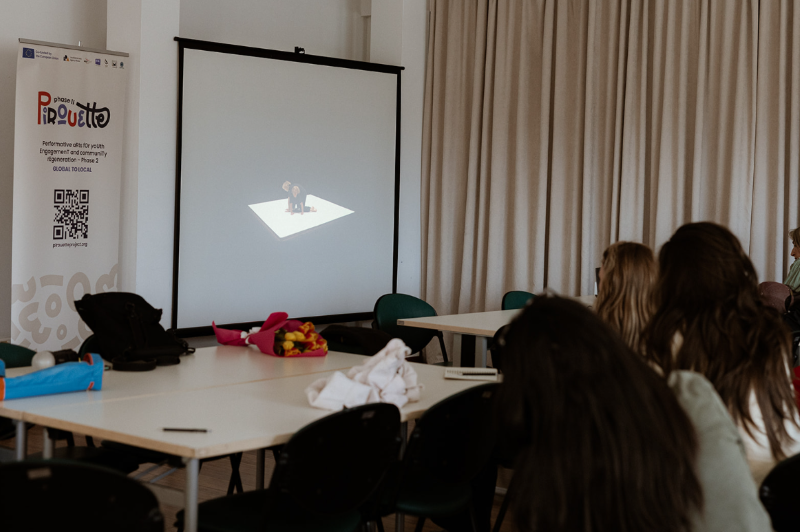
The artistic references in this project do not function as models to be repeated, but as confirmations that the body can be read as an archive. In Marina Abramović’s Balkan Baroque, the act of washing bloody bones becomes impossible labour: an attempt to wash what cannot be washed — war, guilt, violence, history. In Balkan Erotic Epic, the sexual and ritual inheritance of the Balkans opens up: the body as a place of fertility, fear, death, taboo and resistance. In Eszter Salamon’s work, especially in the Monument series, the body is a space in which history continues to live through movement, rupture and relations between generations.
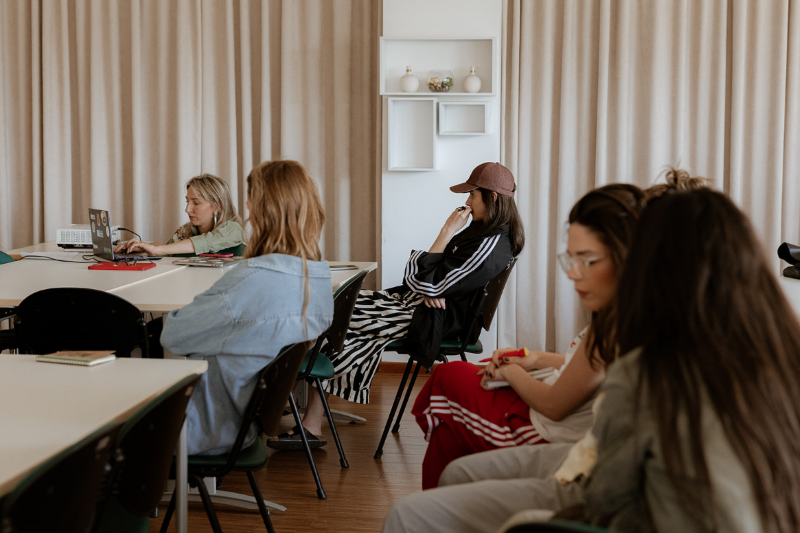
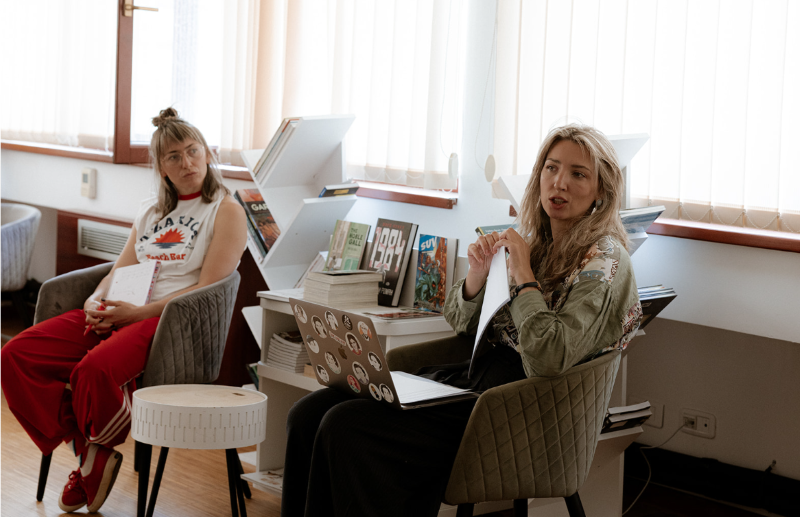
For Piruetta Fusion Workshops in Berlin, this concept is translated into work with students through a simple but demanding procedure: to take one action belonging to women’s labour, ritual or inheritance, and remove it from everyday life. Washing, sewing, embroidery, combing, carrying, waiting, incantation or lamentation are not used as folkloric motifs, but as starting points for contemporary performance. The action is repeated, slowed down, accelerated, displaced into space, exposed to the gaze, connected with voice or textile. It is then no longer only a function, but begins to open layers of labour, memory, violence, discipline, care, economy and resistance.
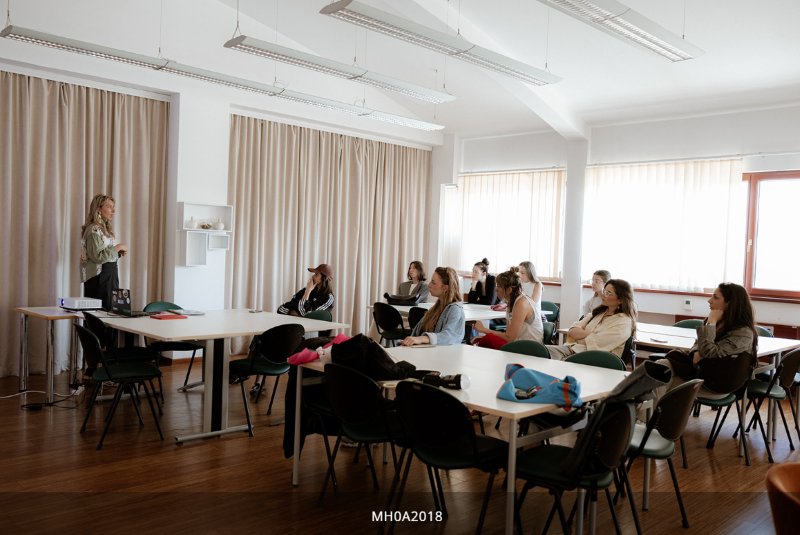
This is also where the principle of soft hack appears: a quiet but subversive displacement of inherited patterns. Instead of destroying tradition frontally or quoting it decoratively, the project opens it from within. Washing is no longer only washing. Sewing is no longer only repair. Incantation is no longer only a protective formula. Waiting is no longer passivity. Through changes of duration, rhythm, intensity and space, what had been taken for granted becomes a question.
The project therefore does not use folklore as costume, but as trace. It is not interested in reconstructing tradition, but in what remains inscribed in the body. At its centre is a female writing that is not always written in letters, but in thread, hand, voice, repetition, fatigue, rhythm and endurance. It is precisely there, in the small movement seen a thousand times but rarely truly looked at, that the space of this project begins: the place where the private becomes public, labour becomes ritual, inheritance becomes a question, and the body becomes language.